Sambrani, Benzoin, and Loban Incense: History, Uses, and India's Ancient Resin Traditions
For thousands of years, aromatic tree resins have filled Indian homes, temples, and sacred spaces with their rich, balsamic fragrance. Among the most treasured are sambrani, benzoin, and loban, three closely related names that are often used interchangeably, yet whose meanings can vary depending on the region, language, and local tradition.
Long before incense sticks became common, fragrant resins were burned directly over glowing charcoal or hot embers, producing thick, aromatic smoke that became an essential part of daily puja, temple worship, festivals, and household life throughout India. Today, these ancient traditions continue through loose resin incense, sambrani dhoop, and handcrafted Indian masala incense sticks inspired by these classic materials.
Whether you are discovering sambrani incense, loban incense, benzoin incense, or traditional resin incense sticks, understanding their history offers a fascinating glimpse into one of the world's oldest fragrance traditions.

What Is Sambrani?
Sambrani (also spelled Sambirani) is one of South India's most beloved forms of incense.
Traditionally, the name refers to aromatic resin incense made primarily from benzoin resin, although recipes often include additional natural resins, herbs, aromatic woods, and botanical ingredients. Depending on the region, sambrani may refer to the raw resin itself, resin-based dhoop, or incense blends inspired by its distinctive fragrance.
Throughout Tamil Nadu, Karnataka, Andhra Pradesh, Telangana, and Kerala, sambrani has been part of everyday life for generations.
It is traditionally burned:
- During morning and evening puja
- Inside Hindu temples
- After cleaning the home
- During festivals and religious celebrations
- Following childbirth in certain regional traditions
- To perfume homes, clothing, and living spaces
Its unmistakable aroma, warm, sweet, softly smoky, and balsamic, has become deeply associated with South Indian culture.
What Is Loban?
Travel north through India and you'll hear a different name for many of these same fragrant resins: loban.
Loban is widely used throughout North India and Pakistan to describe aromatic tree resins burned for their rich fragrance. Depending on the region, loban may refer specifically to benzoin resin, traditional resin blends, loose dhoop, or incense made from these aromatic materials.
In cities such as Delhi, Jaipur, Varanasi, and Lucknow, loban has long been sold alongside sandalwood powder, camphor, guggul, and other traditional puja ingredients.
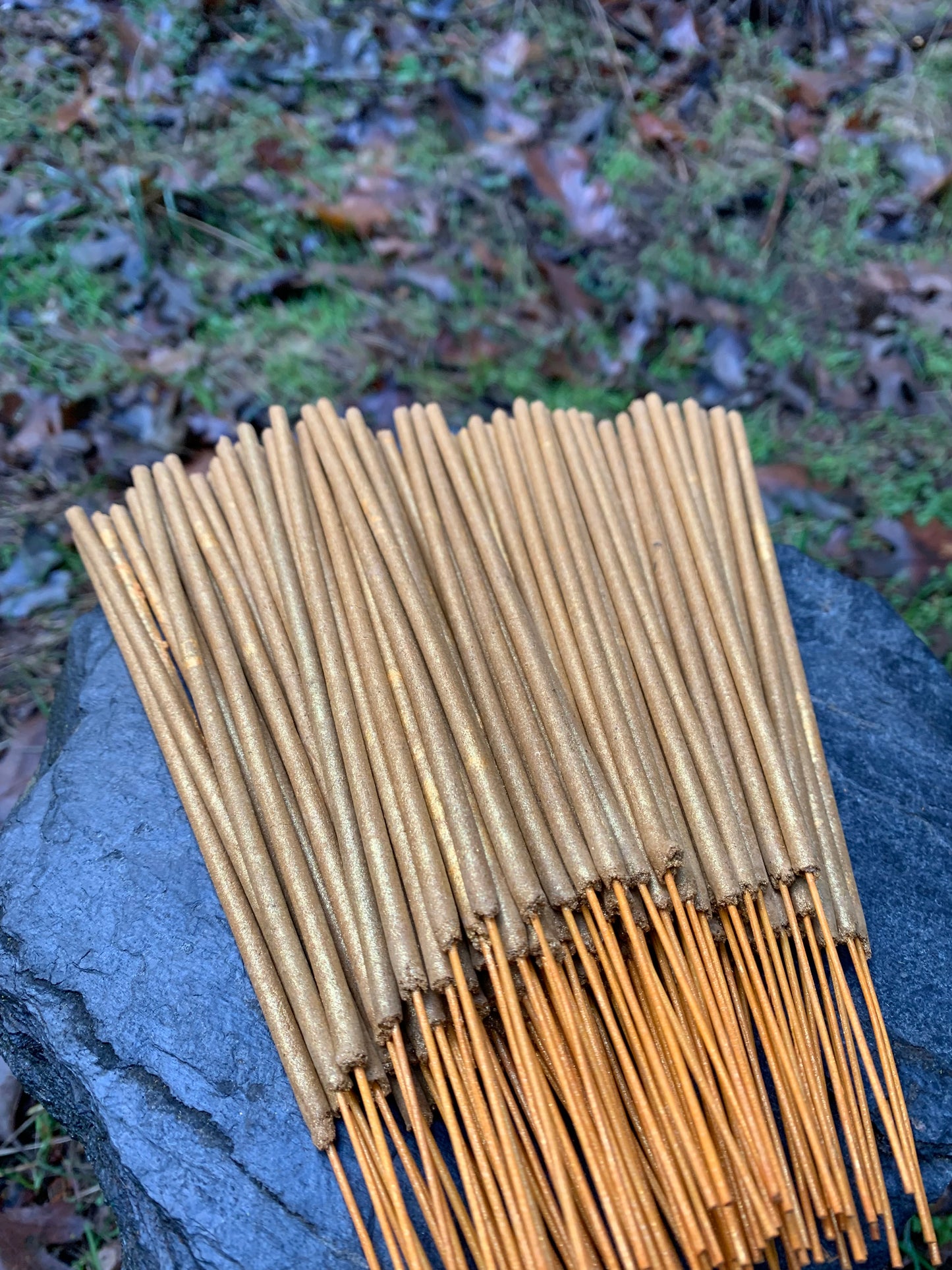
Many Indian incense makers also produce loban incense sticks, capturing the warm temple fragrance of burning resin in a convenient hand-rolled masala incense.
What Is Benzoin Resin?
Benzoin is a natural aromatic resin produced by several species of Styrax trees native to Southeast Asia.
When the bark is carefully cut, the tree releases a fragrant resin that gradually hardens into amber-colored tears before being harvested. For centuries, benzoin has been traded across India, Southeast Asia, the Middle East, and beyond, becoming one of the world's most important incense and perfume ingredients.
Its fragrance is often described as:
- Warm
- Sweet
- Balsamic
- Vanilla-like
- Amber-like
- Softly smoky
- Rich and comforting
Because of its smooth sweetness and remarkable ability to enhance other fragrances, benzoin became an essential ingredient in both incense making and traditional perfumery.

Ancient India's Love of Aromatic Resins
India possesses one of the world's oldest continuously practiced fragrance traditions.
Ancient Sanskrit literature, including the Atharva Veda, Charaka Samhita, and Sushruta Samhita, describes the use of aromatic woods, flowers, herbs, gums, and resins in religious ceremonies, household rituals, and early Ayurvedic traditions.
While benzoin itself likely became more widespread through centuries of maritime trade with Southeast Asia, these texts demonstrate that burning fragrant botanical materials has been part of Indian culture for thousands of years.
As trade expanded between India and Southeast Asia, imported aromatic resins such as benzoin found a natural place alongside native ingredients including sandalwood, agarwood, guggul, camphor, and countless medicinal and aromatic plants already treasured throughout the subcontinent.
By the medieval period, benzoin had become firmly established within Indian incense making, especially in southern India where sambrani remains an enduring household tradition.
Sambrani and South Indian Tradition
Few fragrances evoke South India quite like sambrani.
In many homes across Tamil Nadu and neighboring states, glowing charcoal is placed inside a traditional brass or clay sambrani burner before small pieces of resin are sprinkled over the embers.
Within moments, fragrant clouds of aromatic smoke gently fill the home.
For generations, this practice has been associated with daily worship, welcoming guests, marking special occasions, and creating an atmosphere of cleanliness, warmth, and devotion.
Even today, the comforting fragrance of sambrani drifting through homes and temples remains a familiar part of everyday life throughout southern India.

Benzoin in Indian Perfumery
The story of benzoin extends far beyond incense.
Indian perfumers have long appreciated benzoin for its remarkable ability to soften, round, and enrich fragrance compositions. In traditional attar making, benzoin complements prized ingredients such as:
- Sandalwood
- Rose
- Jasmine
- Hina
- Saffron
- Patchouli
- Agarwood (Oudh)
- Amber accords
- Aromatic spices
Rather than dominating a perfume, benzoin acts almost like a conductor, harmonizing floral, woody, resinous, and spicy notes into beautifully balanced compositions.
Many classic Indian incense recipes borrow directly from these same perfume traditions.
From Loose Resin to Hand-Rolled Masala Incense
Although burning loose resin remains popular, many respected Indian incense makers now incorporate benzoin, loban, and sambrani into handcrafted masala incense sticks.
These blends combine aromatic resins with ingredients such as:
- Sandalwood powder
- Halmaddi resin
- Natural woods
- Herbs
- Botanical extracts
- Essential oils
- Traditional fragrance accords
As the incense burns, the resin contributes warmth, sweetness, and remarkable depth, producing the smooth, layered fragrance for which traditional Indian masala incense is known.
Related Resins in Indian Incense
Benzoin is only one member of a much larger family of aromatic resins used throughout Indian incense traditions.
Other important resin ingredients include:
- Frankincense, valued for its bright citrus-resin aroma.
- Myrrh, known for its earthy, slightly bitter depth.
- Copal, appreciated for its clean resinous sweetness.
- Guggul, one of India's oldest and most revered aromatic gums.
- Amber-inspired fragrance accords, which contribute warmth and richness to many modern incense blends.
Together, these materials create many of the complex resin-forward fragrances found in traditional temple incense and handcrafted masala blends.

Explore Our Benzoin, Loban & Resin Incense Collection
At The Everest Trader, we've carefully curated a collection celebrating India's rich tradition of resin incense.
Our collection includes:
- South Indian Benzoin Incense Sticks
- Natural Benzoin Incense Sticks
- South Indian Loban Incense Sticks
- Golden Loban Incense Sticks
- Natural Loban Oud Incense Sticks
- Meena Loban Incense
- Traditional Loban Incense
- Kawadi Loban Dhoop Resin (Natural Benzoin Resin)
- Guggul Gum Dhoop Resin
- Vedic Havan Samagri Incense
- Baltic Amber Incense
- Natural Copal Incense
- Sacred Copal Incense
- White Copal Incense
Each has been selected for its quality, fragrance, and connection to India's enduring resin incense traditions.
A Fragrance Tradition That Continues Today
Despite changing tastes and modern lifestyles, sambrani, benzoin, and loban remain among India's most cherished aromatic materials.
Their sweet balsamic fragrance continues to perfume temples, homes, meditation spaces, and sacred ceremonies, while inspiring generations of artisans who create handcrafted incense using traditional methods.
Whether burned as loose resin over glowing charcoal or enjoyed through hand-rolled masala incense sticks, these remarkable materials offer a direct connection to one of the world's oldest and most enduring fragrance cultures.
For incense enthusiasts, exploring resin-based fragrances is also an invitation to discover the remarkable diversity of Indian incense itself, where ancient ingredients, regional traditions, and skilled craftsmanship continue to shape some of the world's finest aromatic creations.